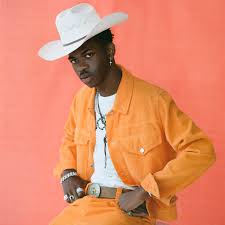
Photo Credit: Teen Vogue
The summer anthem “Old Town Road,” by Lil Nas X had become the longest song to sit at number one on the Billboard Top 100 at around 19 weeks starting from April and ending in August. The country-rap song originated online late 2018 has generated four official remixes and developed the platform for the 20-year-old into a go-to festival artist with his social media presence. Lil Nas X’s rise to fame is not met without controversy. In March, when the song was charting up on the Billboard country music charts, the song was disqualified for its unorthodox country/trap style. The beat was produced by a Dutch producer, YoungKio who sold the beat to Lil Nas X online for $30.
While the disqualification of the song on the country charts hastened the Billy Ray Cyrus remix, the controversy brings up a much-needed discussion of which gatekeepers determine if an artist is listed in a particular genre. Billboard released a statement to Rolling Stone Magazine that stated: “Old Town Road” was removed due to not fitting into enough elements of modern country music sounds. This lead many media outlets and social media to speculate “Old Town Road” was based off race of Lil Nas X who is a black hip-hop artist and song is seen as novelty track in a predominantly white genre of music.
Let’s agree the statement Billboard gave is vague at best. Rolling Stone writer Elias Leight pointed out the music industry still relies on old categorical definitions that bind artists to specific radio and streaming playlists. The crossover success of “Old Town Road” shows that pop music is becoming increasingly genre-less as artists are able to incorporate elements from different genres into their work. Music aggregators and charts should not limit the work of artists, especially black artists to one genre. And while country music grew out of blues and folk traditions in the early 20th century have failed to promote black artists to any prominence.
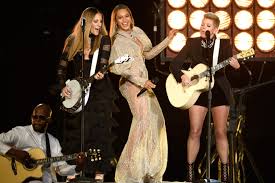
Credit: RollingStone.com
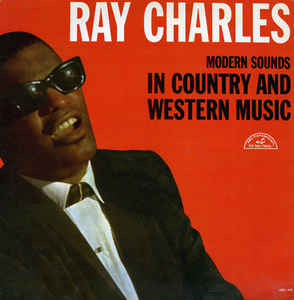
Black artists have been prevalent in country music for decades. Ray Charles’ crossover Modern Sounds in Country and Western Music remains an essential album in the Country genre. Artists such as Charley Pride and Darius Rucker compared to newer acts such as Kane Brown and Jimmie Allen have all found success among country fans. Still, the Nashville standard of country music has struggled to bring black artists into the mainstream fold. The rapper Nelly and Tim McGraw’s crossover smash “Over and Over” charted number three on the Billboard 100 but never found a home on the country and hip-hop radio stations. Likewise, Beyoncé’s performance with the Dixie Chicks of her song “Daddy’s Lessons” at the 2016 CMA awards, received criticism from conservative country fans who ranted on Twitter and boycotted her appearance at the show.
Artists have experimented with country-rap with varied results. Rappers Bubba Sparxxx and Kentucky based group, Nappy Roots, had hits in the early 2000s that incorporated country music. Country-rappers such as Cowboy Troy and Big Smo have found success among country fans. Popular country music acts such as Florida Georgia Line teamed up with Nelly for a remix of their hit song “Cruise”. Popular country songs such as “That’s My Kind of Night” by Luke Bryan and “I Wanna Talk About Me” by Toby Keith do contain elements of hip-hop. And there are country-rap combos that simply feel forced. For example, LL Cool J’s verse of Jason Aldean’s apologetic wash “Accidental Racist”.
Lil Nas X in his own words stated “Old Town Road” should be considered both a hip-hop and country song. It is worth noting with his social media intuition listed “Old Town Road” as a country song on SoundCloud and iTunes and put the song within memes for several months. The song gained traction through the music video app TikTok but has had a feeble reaction when tested in both the rap and country radio markets. The chopped banjo sample is taken from the alternative rock band Nine Inch Nails makes the framework of the song with lyrical tropes of cowboys and horses.
The future of pop music sees artists gaining exposure by taking elements from different genres of music. Ariana Grande moves seamlessly towards R&B and trap sounds and is considered a pop artist. Justin Bieber, Justin Timberlake, and Ed Sheeren are pop artists that often use the sounds of Hip-Hop, and soul within their music. Bieber and Timberlake when collaborating with rappers do have their music promote on hip-hop and R&B radio stations. Artists such as Normani, Lizzo, and Bad Bunny who are artists of color are incorporating different sounds and thus driving forth a new era of pop music which is taking sounds from soul, funk, and reggaeton respectively. The new sounds they artists are making may be a hit on streaming, but might not have strong promotion to receive radio airplay. And it would be a disservice to limit them to one particular sound or played on radio stations that where artists are perceived to have airplay within a particular community.
Country music holds a debt to multiple black artists who have contributed to the genre. While Lil Nas X may not see his success charted in country, we now see country music incorporating more rap sounds into the charts. With the inclusion of viral dance country-rap hit “The Git Up” by Blanco Brown to the country charts, it looks as if country music is slowly, but surely, embracing new sounds.
Further Reading/Listening
Pitchfork-How Solange and Mitski Recosndier Who Can Be the Cowboy

 The Typecaster